A Word From the Editor
Hello friends,
Welcome to Issue 4, a dispatch from roadside motels, desert wetlands, and the center of Los Angeles. This one’s about place: how we shape it, how it shapes us, and what slips through when the lines between here and there start to blur, warp, or bend.
This month, I found myself curating MidwestNice Art’s latest show, this place is strange. The places were, indeed, quite strange. This issue leans into that anxiety—when the familiar turns unfamiliar. From Ash Eliza Williams' residency at the ecological crossroads of Bitter Lake (“Do insects have memories?”) to our open call for public art, every story this month circles back to boundaries and placemaking: how we carve out space, and how space carves us right back.
Not Real Art
Open Call
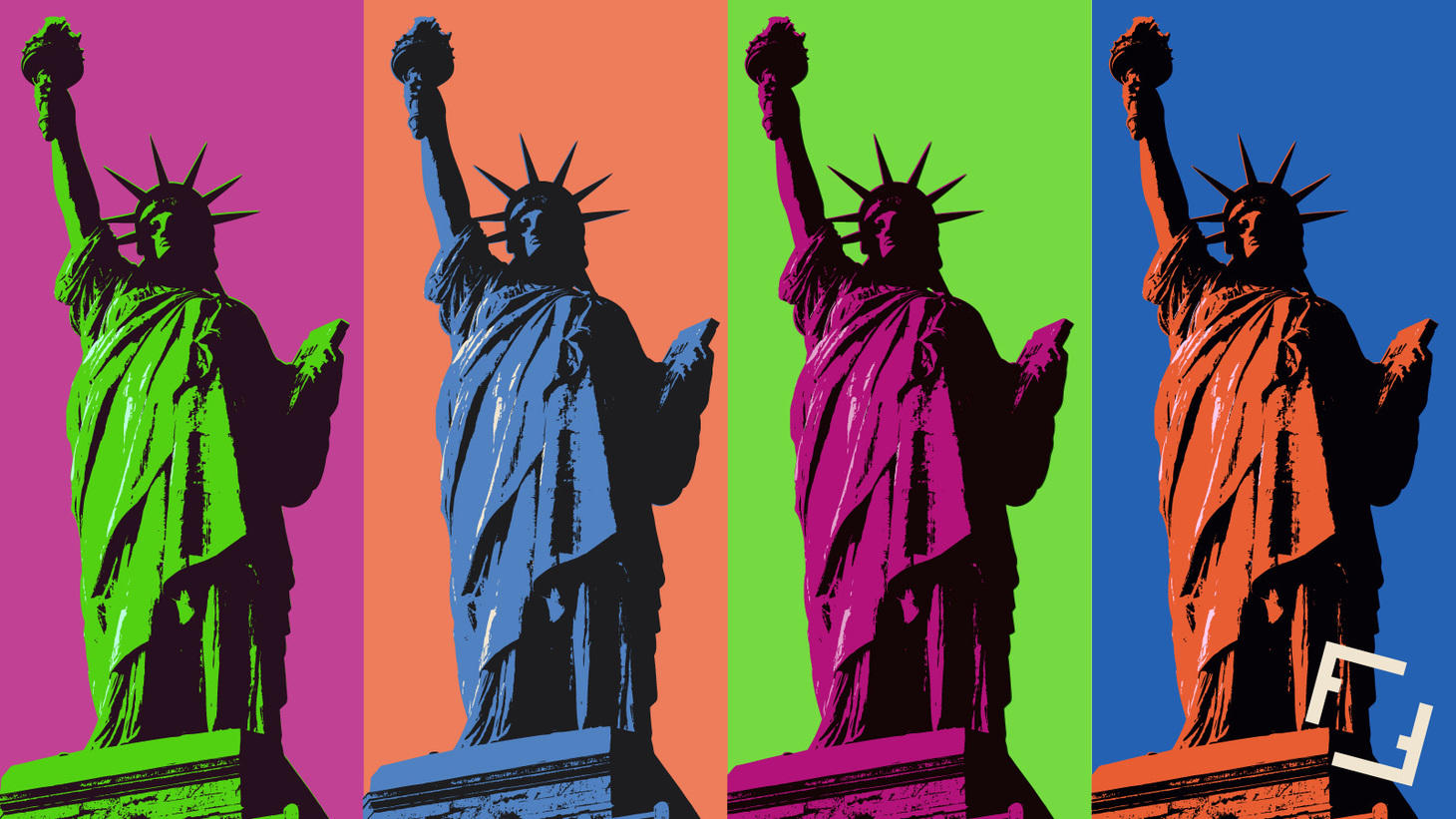
250: A Celebration of Public Art in the U.S.
This July, political murals, billboards, wild installations, and abstract sculptures will take over the landscape. For America’s 250th, we want art that escapes the gallery and spills into parks, deserts, and city streets.
“Public art shapes our shared spaces and collective memory. This exhibition highlights the artists who transform everyday environments into sites of beauty, protest, meditation, and wonder—reminding us that art belongs to everyone and isn’t confined to a gallery or museum.” — Kirsten Bengtson-Lykoudis, curator
This show is for artists who turn sidewalks, parks, and city corners into places for beauty, protest, and surprise. Need inspiration before you apply? Watch Remote, Badir McCleary’s documentary series on public art, streaming on NOT REAL ART.
notrealart.com
Art and Tech
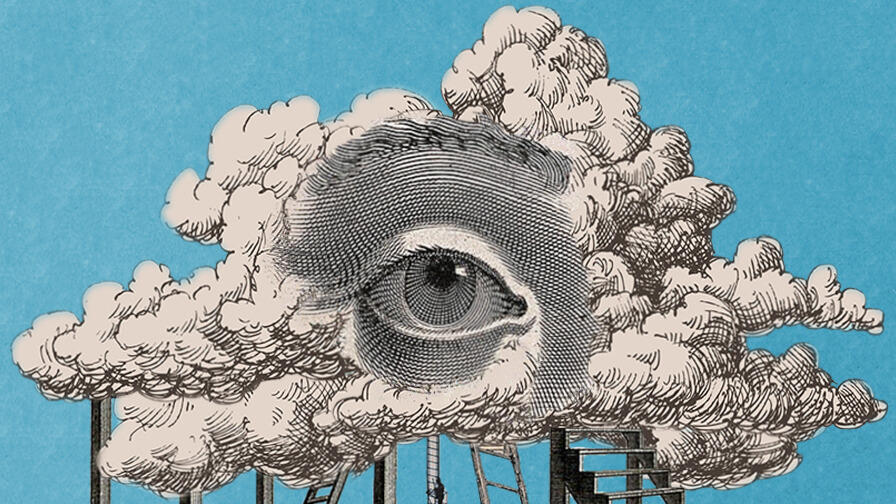
Is AI the New Muse? Artists Weigh the Future of Creative Work
Strike up a conversation with an artist about artificial intelligence, and you’ll probably find them firmly planted in one of two camps: eager experimenters or conscientious objectors who boycott the tools entirely, refusing on ethical, environmental, or existential grounds. A third group hovers in the middle, curious, but not quite ready to commit.
"We shouldn’t reject new tools outright, but we must be vigilant about how these tools are implemented, especially when they’re deployed by companies driven primarily by profit. AI can support creativity—but only if we ensure that it serves people, not replaces them. The goal shouldn’t be to eliminate human involvement in the arts, but to empower it. Art is, and always will be, a fundamentally human act." — Josh Urban Davis
So where do you land? We asked Josh and a few other artists from our shows to weigh in: How do art and technology move forward together? If you want to see it in action, take a look at our latest show, Out of Bounds: Pushing the Lines Between Technology and Art.
notrealart.com
News + Events
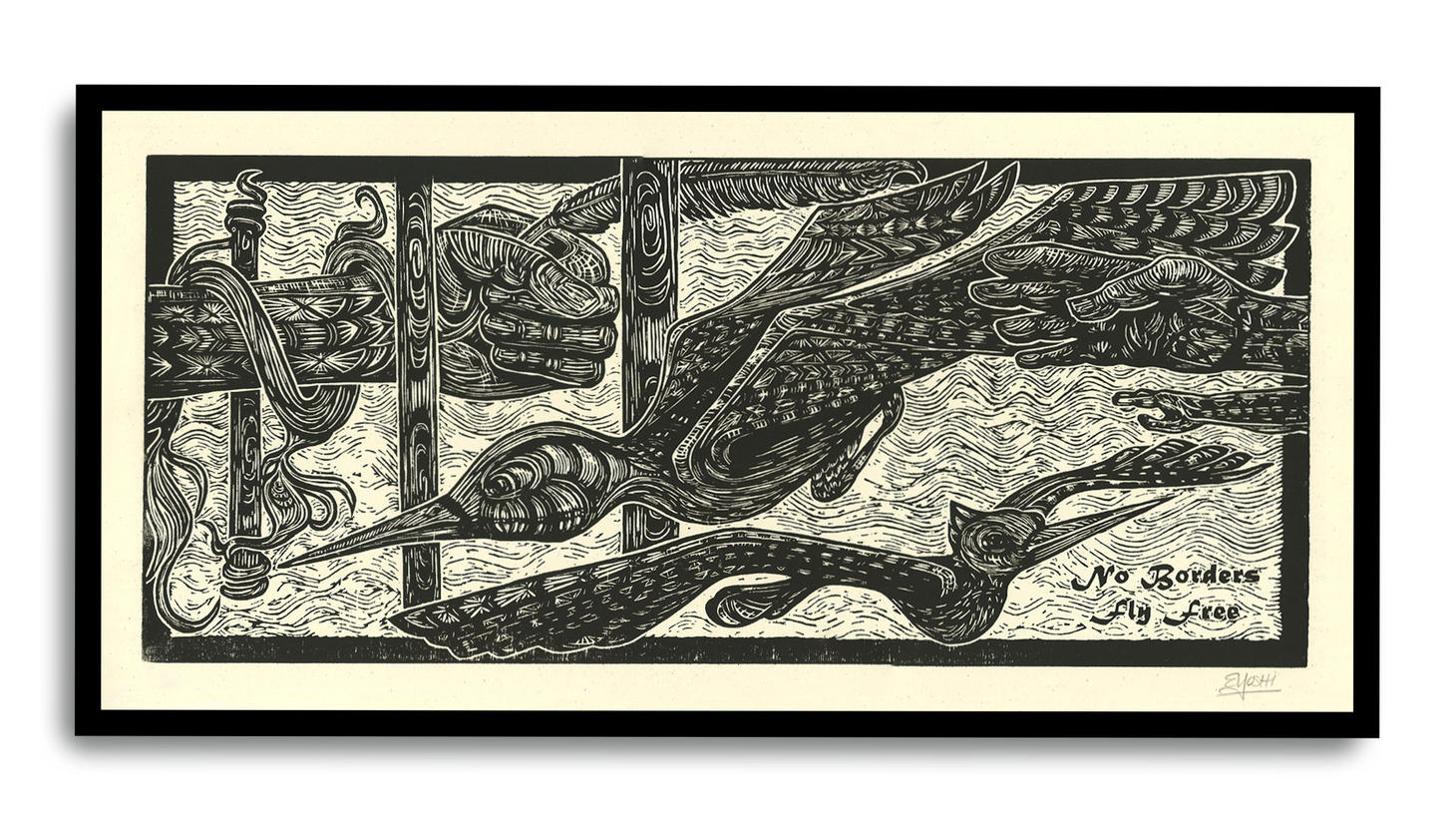
Ink & Earth
Sugar Press Art celebrates a decade of eco-conscious printmaking with Ink & Earth, its 10th anniversary show at Mad Rabbit Studio in Downtown LA. The studio, famous for its recycled materials and love of street art, is bringing together artists, live painting, screen-printed merch, and even on-site tattooing.
“Curating Ink & Earth was about more than just recognizable names. It was about building a conversation.” — Anne Martin, Sugar Press Art founder .
Join the festivities on April 10th at Mad Rabbit Studio, and snag a screenprinted tee that splices Sugar Press and Mad Rabbit logos into one-of-a-kind souvenirs.
sugarpressart.com
Q+Art Interview
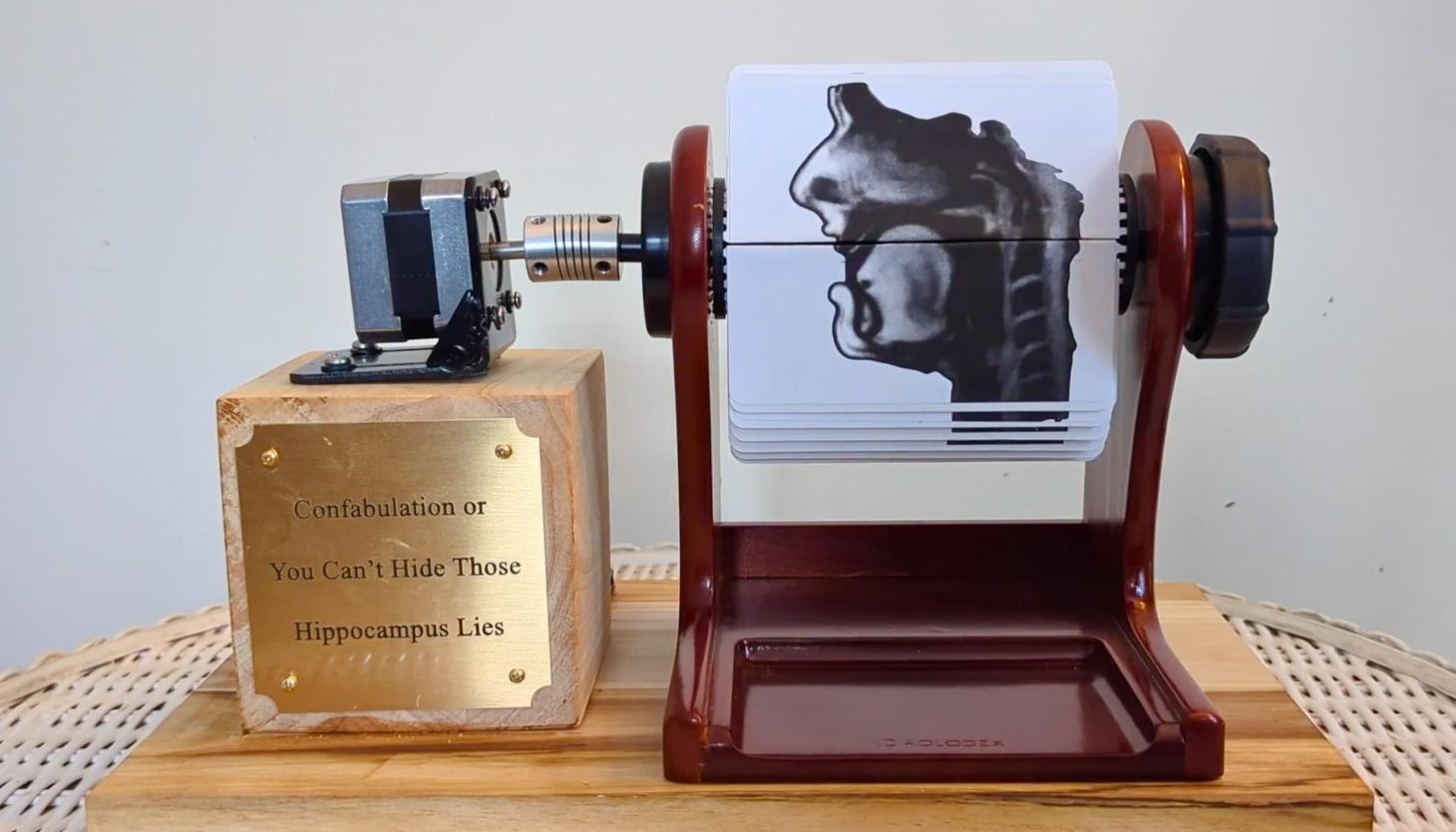
What Does It Mean to Be Creative in the Age of AI?
Artificial intelligence is pushing creative boundaries, but what does that really mean for artists?
“In the age of AI, the arts can redefine mediums again. The union between imagination and the brain has a new creative linkage. Let’s not be fooled; Big Tech will unleash an evil not yet seen. But for the artist, the ability to create the unseen will be amazing. Magic is making the visible invisible, art is making the invisible visible.” — David Held, multimedia artist
We asked multimedia artist David Held and a handful of other artists in our March exhibition, Out of Bounds: Pushing the Lines Between Technology and Art, for their thoughts on what creativity looks like now.
notrealart.com
Contemporary Craft
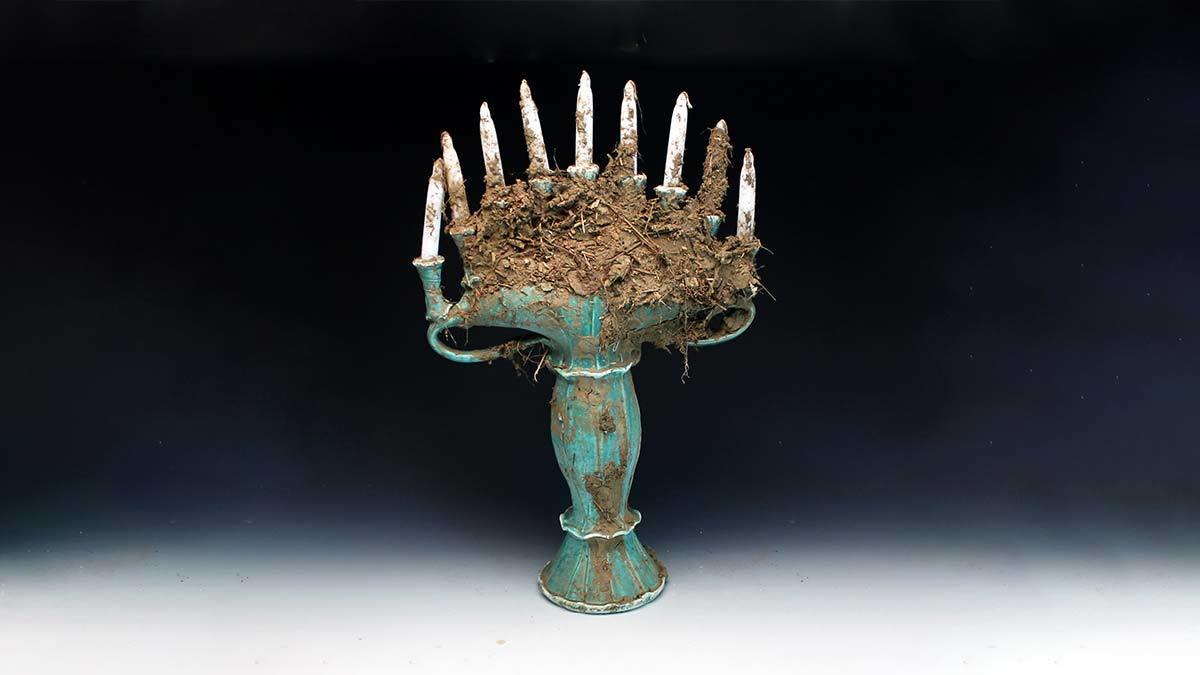
Out of Darkness: How an Artist’s Menorah Brought Light After the Storm
Disaster has a way of turning artists into accidental archivists, even if their chosen medium is as impractical as porcelain. For Mitchell County ceramicist Gertrude Graham Smith, known as Gay to her friends, catastrophe came when Hurricane Helene triggered a mudslide through her kiln shed, an 18-inch deluge that left her gas tank somewhere in Tennessee and her candelabra and menorahs buried up to their necks in sludge.
“When I extracted those pieces, I just left them the way I found them. They’re witnesses, or artifacts. They stand for the experience that I went through, and that many of us out here went through.” — Gertrude Graham Smith, ceramacist
Read the full story, courtesy of our friends at ArtsvilleUSA. Gertrude’s work is also on view in their winter craft exhibition, Liminal Light.
artsvilleusa.com
Exhibitions
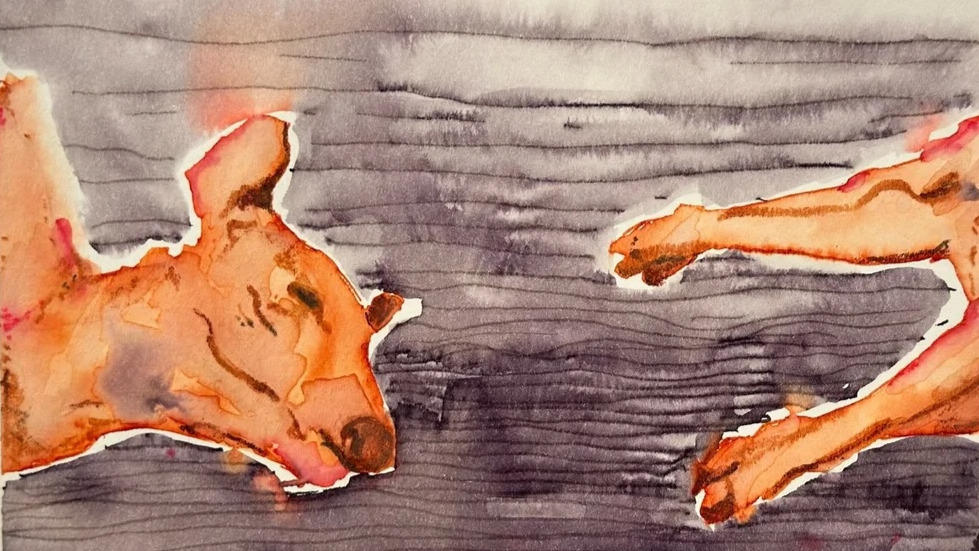
'this place is strange' at MidwestNice Art
Editor-in-Chief Morgan Laurens takes a turn as curator for MidwestNice Art’s latest show. Expect the unexpected: a Madonna stubbed with cigarette butts, a chili spaghetti monster, and plenty of art wrestling with the anxieties of place.
"I have the strangest feeling... after seeing a Madonna stubbed with cigarette butts, inanimate doppelgängers, a ghostly pink termite tent, Waffle House reimagined as pastel purgatory, maps that lead nowhere, rodent skulls aplenty, and, finally, a chili spaghetti monster clutching two oyster crackers to its, uh, chest. These pieces—crafted from paint-splattered archival materials, embroidered photography, and surreal collage—tap into the existential dread that surfaces when our expectations of place clash with our lived experiences. I hope that viewing this place is strange leaves you equally unsettled, caught somewhere between recognition and unease.
Check out the exhibition and read our interview with MidwestNice Art founders Epiphany Knedler and Tim Rickett.
midwestnice.art
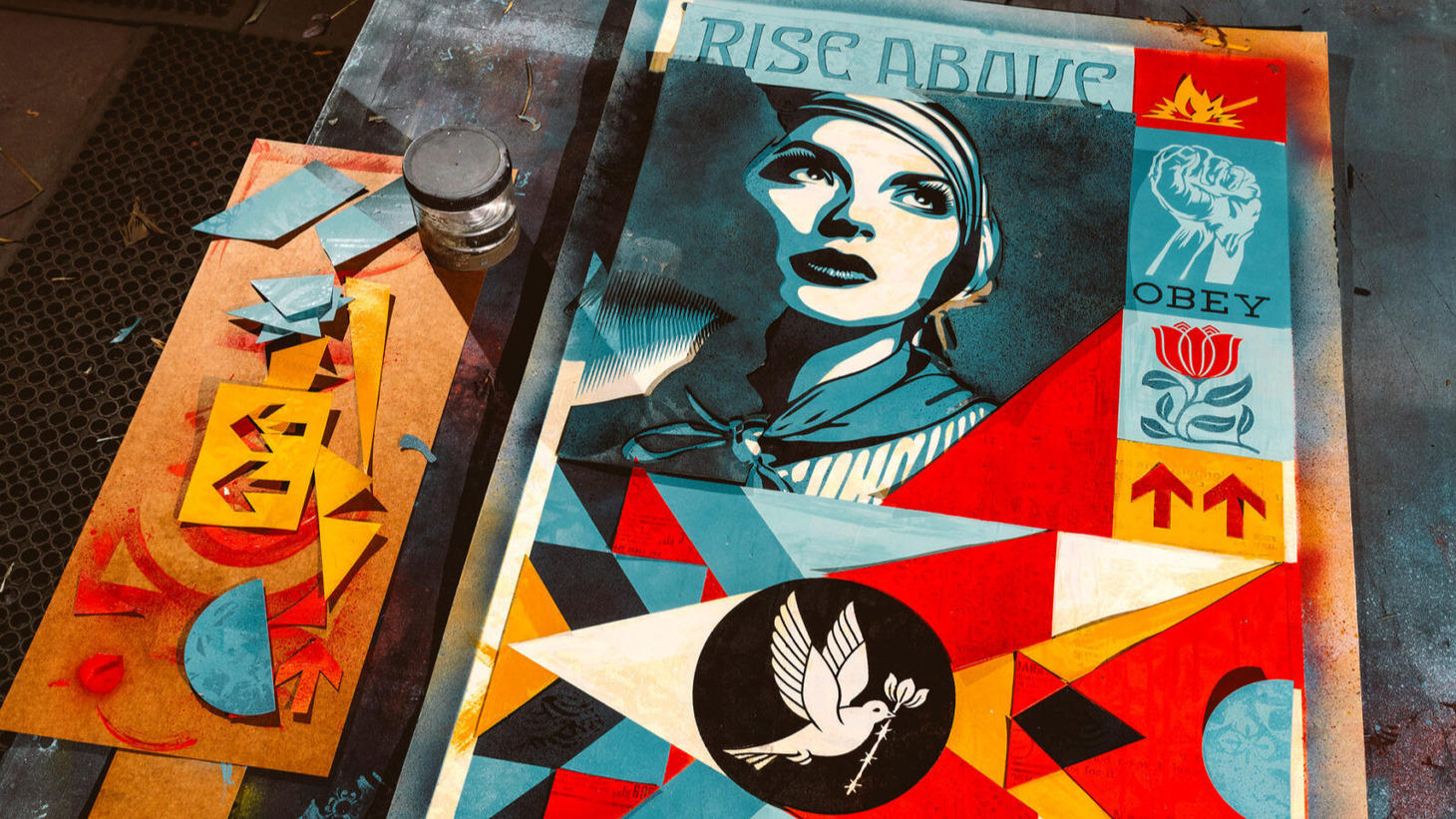
Shepard Fairey: 'Modular Frequency' at Subliminal Projects
Shepard Fairey returns to Subliminal Projects with MODULAR FREQUENCY: 18 new pieces that blend symbols, text, and striking patterns. Drawing on Soviet Constructivism, Russian propaganda, and contemporary pop culture, the iconic artist wrangles visual chaos into something like harmony.
“I’m confronted with an overwhelming number of images and messages daily, forcing me to make sense of things and organize my ideas. I embrace this process of distillation as inspiration—to navigate the world and create art with intention.”
In addition to the new works, the exhibition includes unique works on paper, retired stencils, prints on wood, mono-engravings, and hand-painted multiples.
subliminalprojects.com
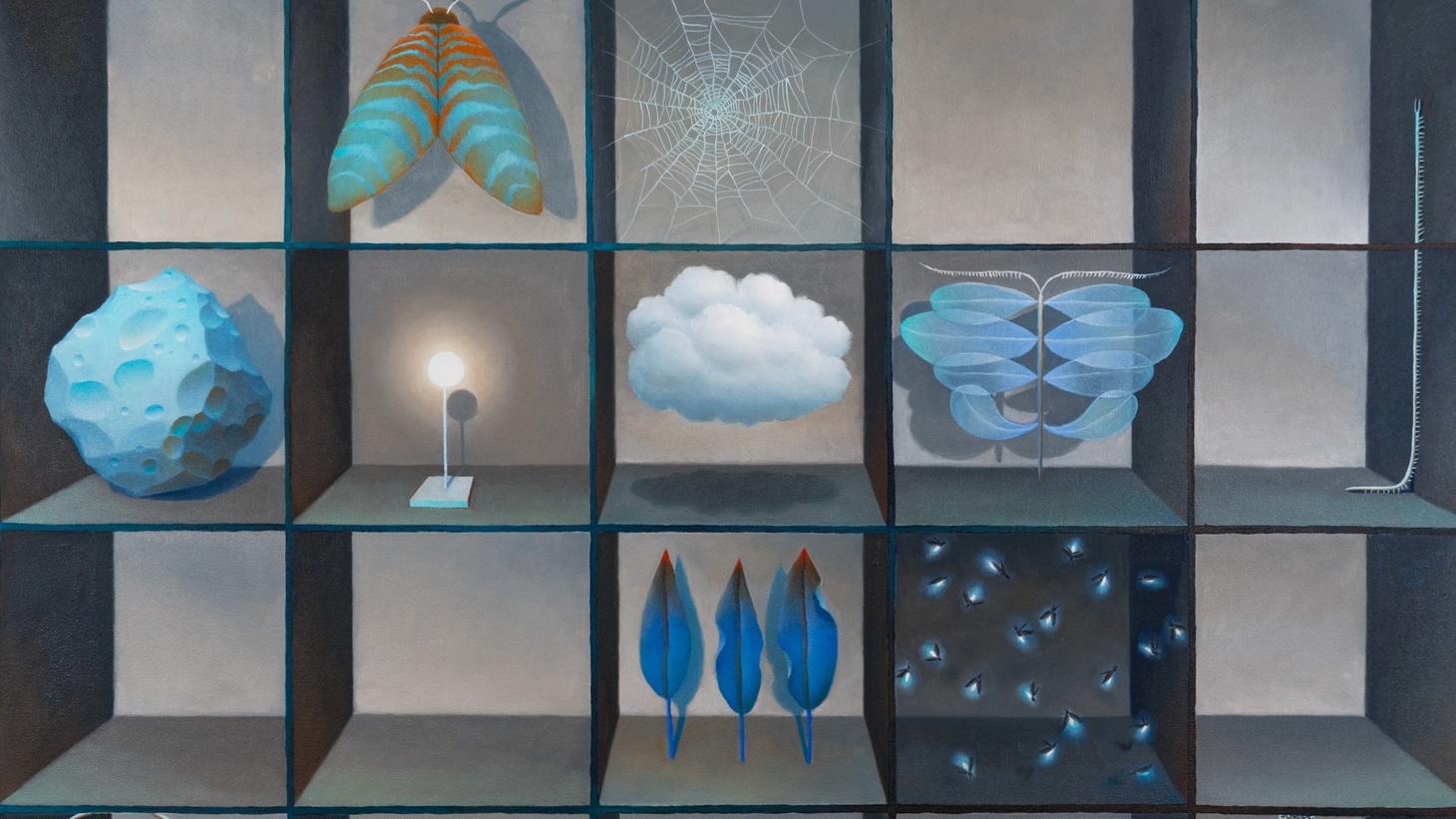
Ash Eliza Williams: 'Bitter Lake' at the Anderson Museum of Contemporary Art
Ashley Eliza Williams’s solo show, BITTER LAKE, at The Anderson Museum of Contemporary Art, is a meditation on nature’s small wonders. Fresh from her RAiR residency, Williams digs into new ways of seeing and connecting with the world around us.
“Informed by 19th-century zoological illustrations, medieval bestiaries, and my daily color-study practice, I investigated the perceptual experiences of a praying mantis and an orb-weaver spider. What does it feel like to have the patience of a mantis or the mathematical perception of a spider? Do insects have memories? What colors emerge when the sensory landscapes of different creatures meet? On a planet experiencing rapid biodiversity loss, are we also losing access to other ways of dreaming and communicating with one another?”
Read our interview with Ash where she discusses “the language of lichens and moss,” the simple joys of hand-writing a to-do list, and saying “no” as a form of stress relief.
rair.org
The Final Stroke
Thanks for reading. Whether you find inspiration in one of Gertrude Graham Smith's menorahs or a sentient noodle monster in this place is strange, I hope these stories make your world a little weirder and a little brighter.
Until next time,
Morgan Laurens, Editor-in-Chief
Not Real Art